



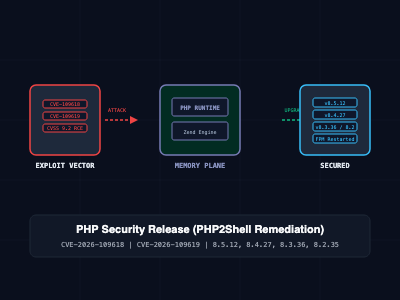
The PHP development team issued emergency security updates for PHP 8.5.12, 8.4.27, 8.3.36, and 8.2.35 to remediate two critical unauthenticated Remote Code Execution (RCE) flaws known as PHP2Shell (CVE-2026-109618 and CVE-2026-109619, CVSS 9.2). Learn how OOM corruption and stale global state trigger remote exploitation, audit vulnerable runtimes across PHP-FPM and FrankenPHP, and deploy immediate server patches. #PHP #PHP8 #Cybersecurity #DevOps #AppSec #Infosec #Linux #SysAdmin #Laravel #RCE
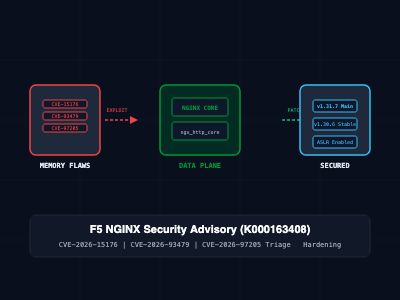
F5 released emergency security updates for NGINX Open Source and NGINX Plus addressing three high-severity memory corruption flaws: CVE-2026-15176 (heap buffer overflow via alias rewrite), CVE-2026-93479 (heap overflow via map regex captures), and CVE-2026-97205 (use-after-free via AIO and SSI). Learn how to audit vulnerable directives, configure immediate mitigations, and patch production ingress controllers. #NGINX #F5 #Cybersecurity #Infosec #DevOps #SRE #AppSec #DevSecOps #Linux #SysAdmin
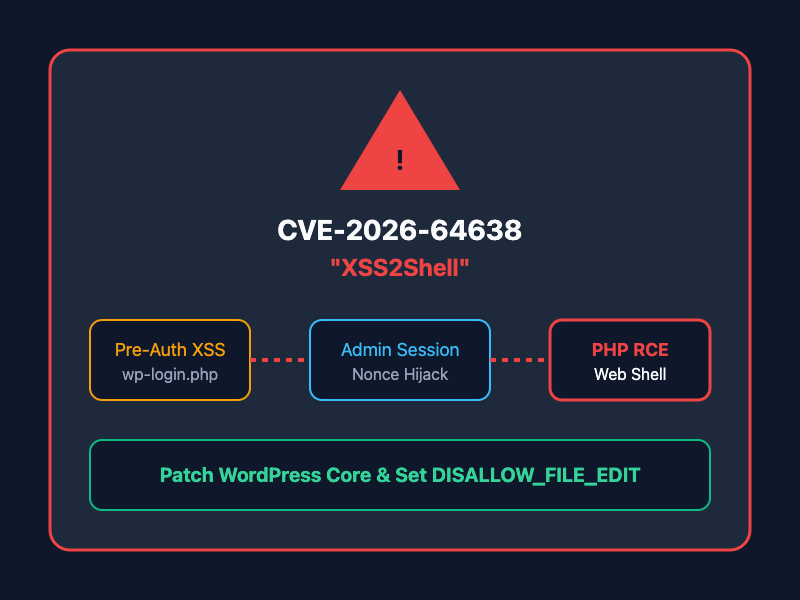
WordPress Core disclosed CVE-2026-64638 (XSS2Shell), a critical pre-authentication reflected XSS on the login screen that escalates to full Remote Code Execution (RCE) when targeting an administrator. Learn how XSS2Shell works under the hood, how the attack chain executes, and how to patch your WordPress infrastructure immediately. #WordPress #Cybersecurity #InfoSec #AppSec #XSS2Shell #CVE202664638 #Vulnerability #DevOps #PHP #WebSecurity
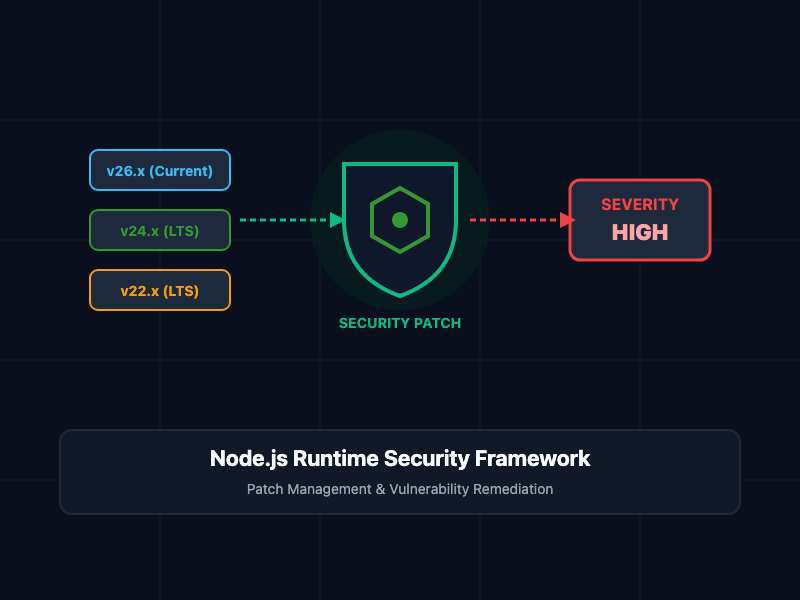
The Node.js project has announced critical security releases for the 26.x, 24.x, and 22.x release lines, addressing high-severity vulnerabilities across supported LTS and current distributions. This technical guide breaks down the release scope, potential risks for EOL environments, and actionable patch management strategies to protect your backend infrastructure. #Nodejs #SecurityRelease #Cybersecurity #BackendDevelopment #PatchManagement #Node26 #Node24 #Node22 #DevSecOps #Infosec